Monday, December 23, 2019

Strong healthy bones

strong healthy bones
Strong healthy bones in old age

Everyone needs strong healthy bones, especially as they get older. Most people know that strength training can help build and maintain muscle mass and strength. But did you know that strong muscles lead to strong bones? Strong bones are less likely to break when you fall. Studies show most of us lose 1% bone mass every year after age 40. Multiple studies have shown that strength training can reduce the bone loss process and, in many cases, actually build bone strength.

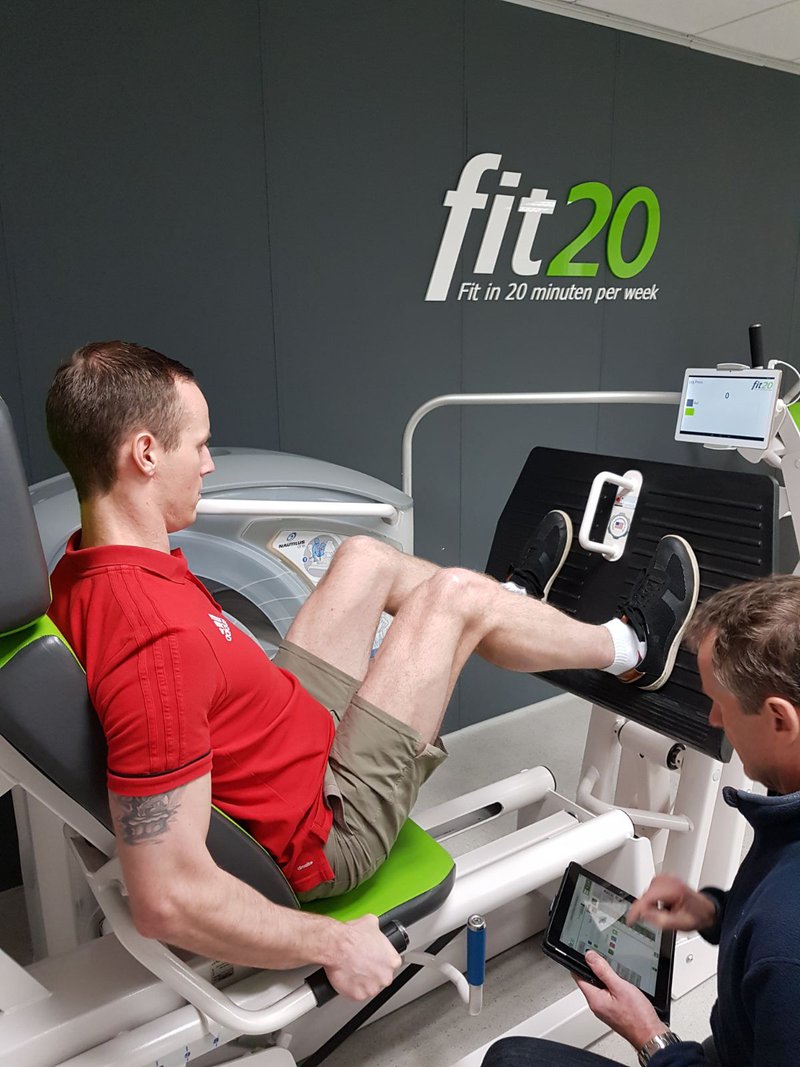
At fit20 we focus on a special method of strength training that’s highly effective and safe. You always train with a personal trainer and best of all, it only takes 20 minutes once per week. No showering or clothes changes required- think of the time you save!

If you do have the misfortune of slipping on the ice this winter or tripping over in the dark, having stronger bones, and faster reflexes may just save you from a nasty fracture.

If you’re interested in improving your health and fitness significantly in just one 20 minute training session per week try our free introductory training to experience the benefits for yourself.

10 Natural Ways to Build Strong Healthy Bones

Here is a summary from the above article:

1. Eat Lots of Vegetables. Consuming a diet high in vegetables has been shown to help create healthy bones during childhood and protect bone mass in young adults and older women.

2. Perform Strength Training and Weight-Bearing Exercises. Performing weight-bearing and resistance training exercises can help increase bone formation during bone growth and protect bone health in older adults, including those with low bone density.

3. Consume Enough Protein. Low protein intake can lead to bone loss, while a high protein intake can help protect bone health during ageing and weight loss.

4. Eat High-Calcium Foods Throughout the Day. Calcium is the main mineral found in bones and must be consumed every day to protect bone health. Spreading your calcium intake throughout the day will optimize absorption.

5. Get Plenty of Vitamin D and Vitamin K. Getting adequate amounts of vitamins D and K2 from food or supplements may help protect bone health.

6. Avoid Very Low-Calorie Diets. Diets providing too few calories have been found to reduce bone density, even when combined with resistance exercise. Consume a balanced diet with at least 1,200 calories daily to preserve bone health.

7. Consider Taking a Collagen Supplement. Emerging evidence suggests that supplementing with collagen may help preserve bone health by reducing collagen breakdown.

8. Maintain a Stable, Healthy Weight. Being too thin or too heavy can negatively affect bone health. Furthermore, maintaining a stable weight, rather than repeatedly losing and regaining it, can help preserve bone density.

9. Include Foods High in Magnesium and Zinc. Magnesium and zinc play key roles in achieving peak bone mass during childhood and maintaining bone density during ageing.

10. Consume Foods High in Omega-3 Fats. Omega-3 fatty acids have been found to promote the formation of new bone and protect against bone loss in older adults.

Conclusion

Bone health is important at all stages of life. Having strong bones is something people tend to take for granted, as symptoms often don't appear until bone loss is advanced. Fortunately, there are many nutrition and lifestyle habits that can help build and maintain strong bones. fit20 is one of the easiest ways because it only takes 20 minutes per week!

If you’re interested in improving your health and fitness significantly in just one 20 minute training session per week try our free introductory training to experience the benefits for yourself.
Tuesday, December 10, 2019

What’s your personal trainer’s role?

Personal trainer in action

Building a good health habit for life is easier when you have an expert personal trainer by your side. Your trainer takes time to understand your goals and offers support, motivation and encouragement. This means that you can be stronger, fitter and healthier in your everyday activities. They then work with you to help you achieve those goals using our science-backed, results-proven formula. Research shows that your results are better with a personal trainer. It makes it harder for you to give up on your goals.

Your Personal Trainer helps your Posture

In daily life, few of us notice how we compensate for our lack of strength by inappropriately adjusting our posture. Your personal trainer observes your posture carefully so that you train the right muscles and get optimum results from every exercise. Correcting any postural issues prior to beginning each of the muscle-strengthening drills redirects your natural posture.

With all your progress recorded on the fit20 app, you can monitor your progress in detail for any given period. Your trainer will regularly discuss your results with you. Your expert personal trainer observes and learns in detail about you, adjusting the machines to suit your height, build and fitness. With your exact results meticulously tracked on the fit20 app, the weights are gradually altered to match to your progress.

Your trainer ensures that you perform each 10-second repetition at a controlled speed. You’ll train each target muscle group for two minutes and, as you reach muscle failure, your trainer coaches you to make a final effort for the last 10 seconds.

This is a good article from the NHS about posture.

It mentions the following causes of bad posture

  • Slouching in a chair
  • Sticking your bottom out
  • Standing with a flat back
  • Leaning on 1 leg
  • Hunched back and 'text neck'
  • Poking your chin
  • Rounded shoulders
  • Cradling your phone

If any of these posture issues apply to you then why not come to fit20 Hellesdon for a free session to see how we can help?

Monday, December 2, 2019

What results can you expect from your fit20 training?

fit20 training
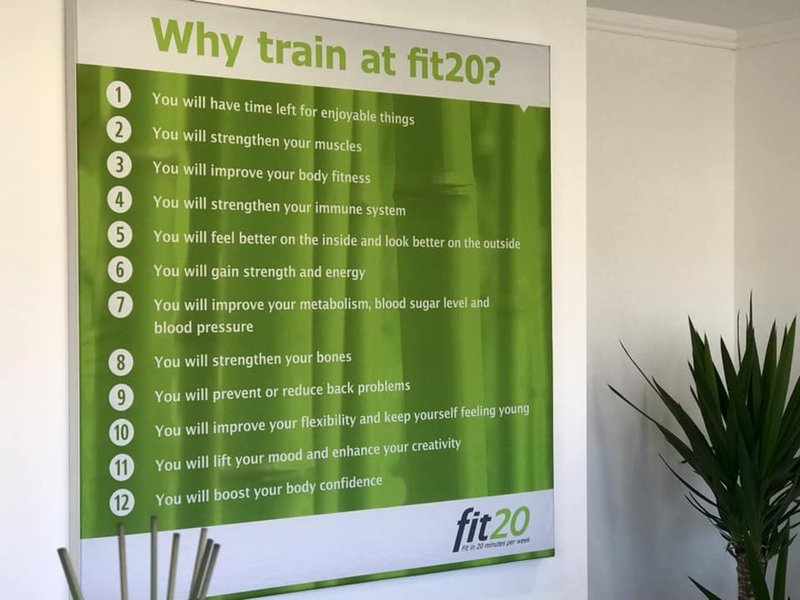
Why train at fit20?

The longer you continue your fit20 training, the better your results will be. Even if your performance plateaus at times, your fit20 programme has a positive and lasting effect in all the areas described below. Which of these benefits most applies to you?

➤ Your functional strength has increased significantly

You will notice this for example when climbing stairs, lifting heavy loads or working in the garden. You will also improve your performance in recreational sports such as golf, tennis, skiing, horse riding or cycling.

➤ Your endurance has increased

You’ll be able to sustain exercise for longer and your breathing will recover more quickly after exertion.

➤ You have more energy

This is partly due to the aerobic process in the mitochondria (the energy factories found in every body cell). Hormonal effects also impact: your insulin levels become more constant and testosterone levels improve.

➤ Your clothes fit better

Especially around your abdomen because fit20 training significantly improves both your metabolism and insulin system. However, as muscles are heavier than fat, you may not actually lose weight even though your body shape and tone improves.

➤ You have improved muscle tone and body shape

Your mirror and the fit of your clothes are therefore more important than the scales in showing you how you’re doing. When you build muscle, your entire metabolism elevates. Muscle tissue needs more fuel than fat, so your basal metabolic rate rises and you use up more calories with no additional effort. Because your muscles grow stronger, your energy usage at rest is also higher than before. This contributes to healthy body shape and composition.

➤ Your insulin sensitivity has improved

Muscle tissue contains many insulin receptors which bind insulin, allowing glucose to enter the cell easily, keeping your blood sugar levels constant and helping to prevent problems such as type 2 diabetes. The less insulin and glucose in your blood, the more efficiently you’ll burn fat and reduce your total body fat percentage.

➤ Your endocrine system has become healthier.

Levels of stress hormones and insulin reduce, while there is a rise in hormones controlling growth and sexual function. This shift has a strong anti-ageing effect which you will experience as improvements in energy levels, libido and general mood. In addition, your immune system will become more resilient.

➤ You have fewer injuries and less back pain.

Many clients find that back pain disappears completely after just a few months of fit20 training. Bone density increases, a benefit that is especially important for preventing osteoporosis in peri- and post-menopausal women.

➤ fit20 training saves time

And, of course, the biggest benefit of all is your time. You get all the benefits above in as little as 20 minutes per week.

fit20 Norwich is offering free trials at its first premises which is at 105 Reepham Road, Hellesdon, NR6 5AB. To book an appointment call 07494 321071 or email hellesdon@fit20.co.uk.

Thursday, November 21, 2019

Every good golfer knows that power comes from the body, not the arms

We've had a number of fit20 clients say that their golf game has improved since starting fit20!

fit20 Norwich
Use fit20 Hellesdon to improve your golf

In this article, I'm going to talk about how strengthening your body with a fit20 workout will add yards to your drive and improve your overall game, in only 20 minutes a week! Yes, you read it right: only 20 minutes a week, just once a week! Compare that with this advice from GolfDigest.

If you are starting out and not in great shape, I suggest giving yourself at least 3 rest days before a competitive round of golf- to allow the body to recover after a fit20 workout. The body works best when it is rested. The body is also a single unit. So your workouts should exercise all major muscle groups: back, legs, abdomen, chest and, shoulders and arms.

Back:

Back problems are as common as bogeys on the golf course. To gain those extra yards in your golf swing, you need a strong back.

Arms:

Strengthening arm muscles increases clubhead speed and this increases yards off the tee. Stronger arms also help with executing shots around the green and in the rough.

Legs:

A building is only as strong as the foundation it's built on. The best golfers know that without a solid base, your swing will collapse. Strength and balance in the thigh, calf and gluteal muscles help deliver a more fluid, powerful swing.

During the backswing, your legs are the foundation. During the downswing, the legs are powering the engine. By the end of a round of golf, the difference between winning and losing can come down to the stamina of your legs - especially if you are walking and carrying a golf bag on your back.

Abdomen:

Abdominal muscles play an important role by complementing the back muscles. Strong abs can help you get more mileage out of your back.

During your swing, torso rotation is enhanced by strong abs. Strong abs increase the ease with which the body coils and the speed with which the body unwinds, adding impressive distance to your shots. They also provide stamina to repeat the rotation and increase accuracy.

fit20 Hellesdon

Make sense? Now all you need, in the words of Nike, is to "just to do it”. Why not drop into the fit20 Hellesdon studio and give it a try? Your body will thank you- and so will your scorecard!

Follow us on Facebook or Twitter.

Friday, November 15, 2019

Government changes guidelines for physical activity

fit20 believes that the UK fitness industry should make a concerted effort to highlight the importance of strength training. This follows the publication of the Chief Medical Officer's (CMO) guidelines for physical activity.

fit20 Hellesdon
A typical 20 Minute per Week session at fit20 Hellesdon

That is the message from Dr James Steele, principal investigator at the ukactive Research Institute, who says that the new CMO guidelines rightly described muscle strengthening as "fundamental to the ability to perform daily tasks".

Published on 7 September 2019, the guidelines recommend all UK adults to undertake muscle strength exercises.

Forgotten Guideline

In an open letter to the fitness industry, Dr Steele said muscle strengthening had been the "forgotten guideline" for too long.

"In previous iterations of the CMO’s guidelines, the focus had been upon the importance of moderate-to-vigorous aerobic physical activity – with the importance of muscle strength, and activities to promote it, playing second fiddle," Dr Steele said.

"The latest guidelines are now more reflective of the known value of activities such as resistance training for all adults – and now the recommendations position strength training activities equally alongside the aerobic activity recommendations.

"It is encouraging to think that these guidelines and simple recommendations may be the first step towards not only a more active nation but also a stronger one.

Muscle-strengthening

"Muscle-strengthening has been the forgotten guideline, but now is the time for our sector to play its role in helping raise awareness of its importance, alongside moderate-to-vigorous aerobic activity, providing information and facilities to help people achieve these exercises in a way that best suits their lifestyle, and helping get the nation stronger."

The CMO guidance states “Adults should also undertake physical activity to improve muscle strength on at least two days a week”. So, what can you do to strengthen your muscles? There are many options. But the things that could stop you sooner or later, will be lack of time, lack of results, lack of motivation, not knowing what to do, injury, a dislike of regular gyms, or some combination thereof.

Fit20 Hellesdon

And that’s where fit20 comes in. It’s based on science and backed up by a decade of positive results. We’re so confident, we guarantee it in one highly effective 20-minute personal training session per week! Why don’t you pop into fit20 Hellesdon and give it a try?

Follow us on Facebook or Twitter.

Monday, July 8, 2019

12 Yoga Tips for Beginners to Get the Most of Their Practice

The popularity of yoga has soared in the last decades, and it seems that every other friend and acquaintance of ours is already practicing it. But don’t let it fool you into thinking it is easy: yoga is quite challenging, especially for beginners.

The good news is that there are some practical tips to make your yoga beginner’s challenge easier and make it a pleasant and worthwhile experience.


12 Yoga Tips for Beginners to Get the Most of Their Practice

1. Decide why you want to do yoga

We may decide to do yoga for many different reasons. You may get into it to extend your religious practice, for spiritual growth, or simply to maintain good health. Each reason implies different practices and knowledge, so it is important to know what exactly your reasons are.

2. Get advice from an experienced yoga teacher


Some of us don’t feel like we can start practicing yoga on our own, and go to studios to take yoga classes. Others try to establish home practice and try to start doing yoga on their own. Both options are quite viable, but getting proper advice at the beginning will give you a good understanding of where to start. A teacher can give you advice on which poses to do and how often, based on your current health and body structure.

3. Buy a sticky mat

A sticky mat is an indispensable tool for some poses. Beginners often have balance problems, and a sticky mat will ease the proves and help you avoid problems such as muscle sprains and cramps.

4. Take care of comfortable clothes

The basic kit you will need consists of stretchy pants or leggings and a top. You need to make sure your clothes are comfortable and allow for free movement.

5. Make nutritional adjustments

Your food should be lighter and contain slow carbs and fiber; eat more oatmeal, grains, fruit and vegetables. A healthy diet also implies more substantial breakfasts and very light suppers. Eat something light a couple hours before your practice, but never practice after being hungry for hours.

6. Stay hydrated

Water is key when you start any physical activity, so make sure you drink at least 1,5 liters per day. Take a bottle of water to your every yoga class.

7. Write down notes


Names of poses, practices and other relevant terms are often said in Sanskrit. In order to keep up and not get lost, it will help you to memorize the terms. In addition to that, a good habit is to write down what you have learned each time, so you can track your progress.